AI Lab
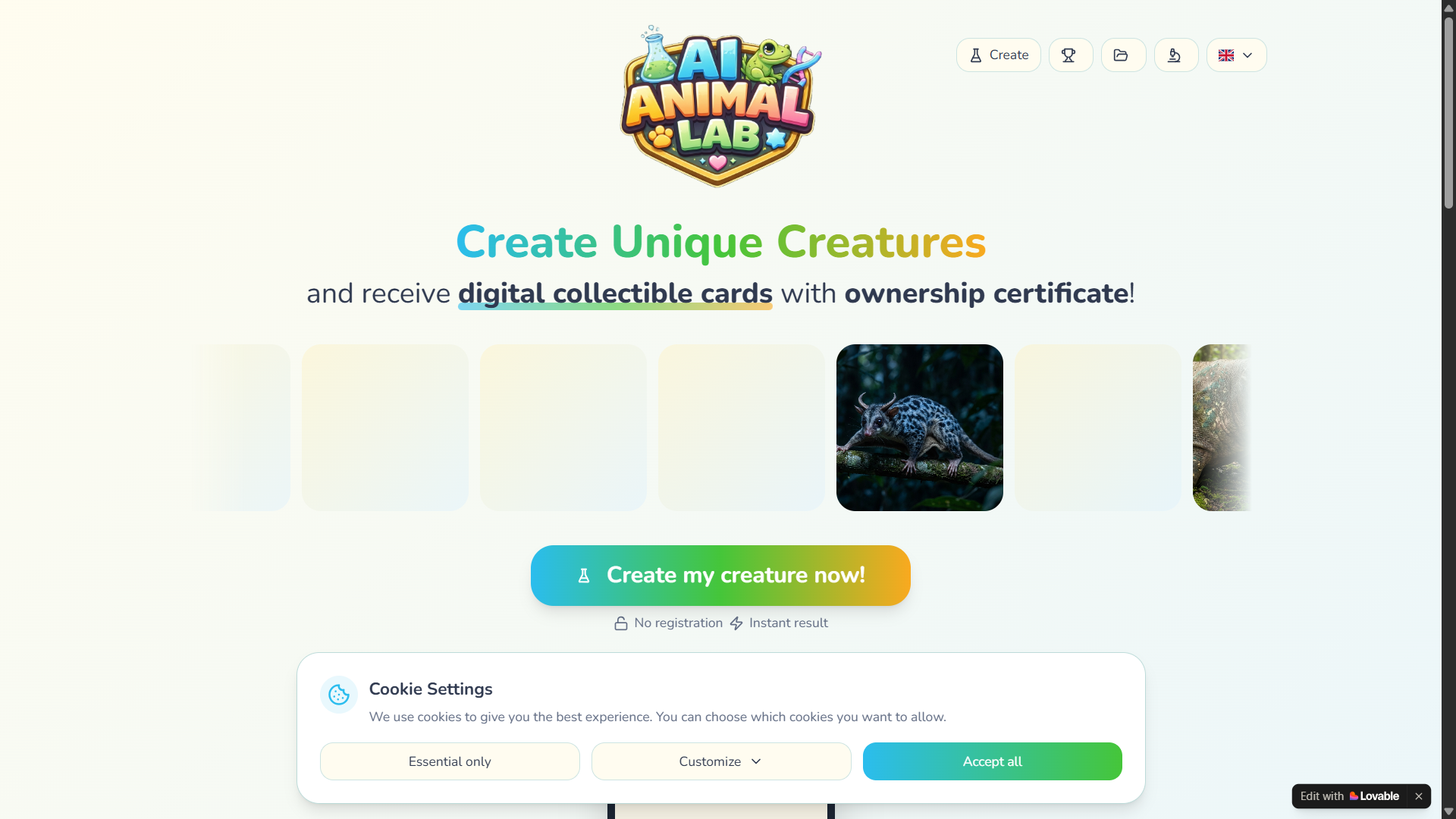
AI Animal Lab began with a simple family-inspired question: What if people could invent entirely new animals using AI?
The independent creator developed a playful online laboratory where visitors can combine animal characteristics, generate fictional species and turn them into collectible cards.
Built with Lovable, the project connects creativity, imaginary biology and AI-generated artwork in one accessible experience.
The creator's personal name has not been publicly confirmed. The website describes its origins as a father-and-child-inspired idea.
Tech stack
- Antigravity
- Codex
- Devin Desktop (Windsurf)
Links
Prompt
PROJECT: AI ANIMAL LAB — AI CREATURE GENERATION & DIGITAL COLLECTIBLE STUDIO

Project Vision

Build an original, playful AI-powered website that allows users to invent extraordinary fictional animals, explore their characteristics and collect them as unique digital trading cards.

The application should combine creative AI image generation, imaginary biological traits, creature rarity calculations and an interactive collectible gallery.

The main idea is simple:

What if anyone could create a completely new animal species using artificial intelligence?

Users should be able to combine habitats, body structures, animal characteristics, colors and personality traits to generate original fictional creatures.

Each generated animal should receive a unique identity, a descriptive profile, a fictional DNA code, a rarity classification and a beautiful downloadable collectible card.

The product should be achievable by an independent developer using AI-assisted development tools such as Lovable.

Make the application visually distinctive, entertaining, responsive and genuinely functional.

1. Interactive Landing Page

Design a vibrant, imaginative homepage that immediately communicates the application's playful purpose.

Use a soft ivory background with turquoise, lime-green and warm orange accents.

Create a custom illustrated logo featuring a laboratory flask, animal silhouette and DNA symbol.

The hero section should include the headline:

"Create Creatures That Have Never Existed."

Place a beautiful horizontal gallery of imaginative AI-generated animals beneath the headline.

Show unusual combinations such as a bird with crystalline feathers, an amphibian with bioluminescent skin and a small mammal with fantasy-inspired markings.

Add subtle hover interactions and animated image transitions.

Include a prominent "Create My Creature" button.

Keep the interface friendly and accessible to both younger and older audiences.

2. AI Creature Creation Wizard

Build an interactive multi-step creature designer.

Guide users through creating an animal by selecting imaginative biological characteristics.

Step One — Habitat

Allow users to choose where their creature lives.

Available options should include tropical rainforest, deep ocean, desert, mountains, frozen tundra, wetlands and fantasy environments.

Step Two — Body Structure

Allow users to select a general body type, such as mammal-like, reptile-like, bird-like, amphibian-like, insect-like or aquatic.

Step Three — Physical Features

Provide selectable traits including wings, horns, claws, tails, scales, feathers, fur, shells, fins and unusual appendages.

Step Four — Appearance

Let users choose primary colors, secondary colors, markings, texture and distinctive visual characteristics.

Step Five — Personality

Offer imaginative attributes such as curious, shy, playful, intelligent, nocturnal, protective and adventurous.

Display a live summary of the selected traits.

Allow users to randomize their selections or return to earlier steps.

3. AI Creature Generation Engine

Integrate a capable reference-guided or text-to-image generation API.

Convert the user's selected characteristics into detailed image-generation instructions.

The generated prompt should include the creature's body structure, habitat, coloration, anatomical features, pose, environment and visual style.

Aim for realistic nature-documentary-inspired imagery with believable lighting, texture and environmental detail.

Maintain consistency between the selected traits and the generated animal.

For example, if a user chooses aquatic habitat, iridescent scales and multiple fins, those characteristics should influence the final image.

Generate one primary creature image, with an optional regeneration feature.

Show a proper loading state while the AI creates the artwork.

Handle failed API requests and generation timeouts gracefully.

Do not display unrelated placeholder images as completed user creations.

4. Fictional DNA Algorithm
Develop a deterministic trait-encoding system that creates a unique identifier for each saved creature.

Represent its characteristics through structured data.

For example:

- Habitat classification.
- Body family.
- Main color.
- Special abilities.
- Texture.
- Distinctive features.
- Personality.
- Generation seed.

Generate a unique creature record ID, with a separate readable DNA-inspired code.

The DNA code should be a fictional identification mechanism rather than a claim of actual biological genetics.

Store the selected traits and generation metadata so the original creature profile can be retrieved later.

Ensure identifier collisions are handled reliably.

5. Creature Rarity System

Create an entertaining collectible rarity system.

Use predefined trait frequencies and weighted rarity calculations.

Support five classifications:

Common: Frequently occurring characteristic combinations.

Uncommon: Less frequent combinations.

Rare: Distinctive and difficult-to-obtain traits.

Epic: Highly unusual combinations with special visual characteristics.

Legendary: The rarest defined combinations.

Calculate a rarity score using transparent rules.

Display the score through a beautiful visual gauge.

Ensure rarity remains consistent after a creature is created.

Do not imply that fictional rarity scores have financial value or investment potential.

6. AI Creature Naming

Implement an intelligent naming assistant.

After generating a creature, use an AI language model to propose three original names based on its selected characteristics.

Names should feel imaginative, memorable and suitable for a fictional animal species.

Allow users to select one of the suggestions or enter a custom name.

Generate a short fictional scientific-style species designation where appropriate.

Avoid using names that falsely imply the creature is a real recognized animal species.

7. AI Creature Biography Generator

Create a structured profile for every generated animal.

Use AI to describe:

- Creature name.
- Fictional species.
- Natural habitat.
- Approximate size.
- Diet.
- Personality.
- Special abilities.
- Defensive characteristics.
- Typical behavior.
- Interesting fictional facts.

Write descriptions in a playful, nature-documentary-inspired style.

Clearly identify the content as fictional creature lore.

Ensure the biography is consistent with the generated traits and avoids contradictory biological descriptions.

Allow users to regenerate the description without changing the saved creature identity.

8. Digital Trading Card Generator

Develop a collectible card system that transforms generated creatures into attractive digital cards.

Each card should include:

- AI-generated creature image.
- Creature name.
- Fictional species classification.
- Rarity level.
- Rarity score.
- Unique DNA identifier.
- Habitat information.
- Short creature description.
- Distinctive card number.

Create an original card visual system with decorative frames, elegant typography and color treatments based on rarity.

Common cards should have restrained styling, while legendary cards may feature tasteful metallic effects and special decorative elements.

Use actual editable text layers for names and identifiers to ensure accurate rendering.

Allow users to download the complete card as a high-resolution PNG.

9. Creature Ownership Certificate

Generate a digital ownership certificate for each saved creature.

Include the creature's name, card image, DNA code, creation date and unique certificate identifier.

Create a private owner access code separate from the publicly visible DNA identifier.

Use cryptographically secure token generation for ownership credentials.

Display the owner code only to its authorized holder.

Provide clear instructions explaining that losing the code may prevent future access if no recovery mechanism exists.

Do not put secret owner codes into public screenshots, URLs or shared trading cards.
Make clear that the certificate represents an application-level digital collectible, not a legally verified ownership claim or blockchain asset.

10. Registration-Free Experience

Allow visitors to begin creating creatures immediately without signing up.

Build a temporary guest session that preserves the current creation process.

After generation, provide a secure way for users to save their creature using its identifier and private access code.

Avoid requiring email addresses or passwords for basic creation.

Use appropriate rate limiting to prevent automated abuse.

Clearly explain how access and recovery work.

11. Creature Collection Library

Create a personal collection interface.

Users should be able to enter their creature DNA identifier and private owner code to retrieve a saved card.

Display owned creatures in an organized gallery.

Support filtering by rarity, habitat, creation date and selected characteristics.

Allow users to inspect individual creature profiles and download their cards.

Prevent unauthorized changes to another user's saved creatures.

12. Community Hall of Fame

Develop a public discovery gallery showing remarkable fictional creatures created by users who have chosen to publish them.

Display:

- Creature images.
- Public names.
- Rarity classifications.
- Creation dates.
- Public DNA identifiers.
- Short descriptions.

Allow filtering by rarity and habitat.

Include a featured-creature section highlighting exceptional creations.

Do not publicly expose private owner codes or other sensitive information.

Provide moderation controls for inappropriate names and generated images.

13. Creature Comparison

Build an optional side-by-side comparison interface.

Allow users to compare two fictional creatures based on their traits, rarity, habitat and special abilities.

Create an interactive visual summary showing similarities and differences.

Display the selected animal images prominently.

Support sharing a read-only comparison link.

Keep comparisons entertaining without suggesting that fictional numerical scores measure real biological superiority.

14. Shareable Creature Profiles

Generate a unique public profile page for every creature whose owner enables sharing.

The page should contain its main image, fictional biography, rarity classification, DNA identifier and collectible card.

Implement social sharing metadata so links show suitable previews on platforms such as X, Discord and messaging applications.

Provide a Copy Link button.

Do not expose confidential access credentials.

15. AI Creative Assistant

Introduce a small AI assistant that helps users invent interesting creature combinations.

Users should be able to request ideas such as:

"Create a mysterious animal that lives in underwater caves."

"Make a small forest creature with bioluminescent wings."

"Design a desert animal with unusual defensive abilities."

The assistant should convert these descriptions into selectable traits.

Allow users to review and modify all suggested characteristics before generation.

Keep the assistant focused on creature creation rather than implementing an unnecessarily complex general chatbot.

16. Backend and Database

Use Supabase for persistent storage and server-side services.

Create database tables for:

- Creature records.
- Selected traits.
- Generated image references.
- Rarity scores.
- DNA identifiers.
- Ownership certificates.
- Private access credentials.
- Public gallery entries.
- Generation history.

Store ownership credentials securely, preferably as verifiable hashes rather than retrievable plaintext.

Apply appropriate database access controls.

Store generated images in protected object storage and publish only approved public assets.

Maintain a clear separation between public creature information and private ownership records.

17. Technical Implementation

Use Lovable for initial AI-assisted application development.

Implement the frontend using React, TypeScript and Tailwind CSS.

Use Framer Motion for subtle interface transitions.
Use Supabase for database storage, server-side functions and generated media.

Integrate a suitable image generation API for animal artwork.

Use a language model such as Claude or Gemini for naming, descriptions and creative assistance.

The named model providers are implementation suggestions, not verified components of the original website.

Use Zod or equivalent schema validation for generated data.

Keep model API keys on the server.

Introduce asynchronous job processing and usage limits to control generation costs.

18. Visual Identity and Experience

Design an original creative world centered around the idea of a fictional biological laboratory.

Use playful illustrations, custom DNA motifs, colorful rarity indicators and interactive discovery elements.

Avoid generic cryptocurrency collectibles aesthetics.

Give the interface the charm of a digital creature encyclopedia combined with the polish of a modern creative application.

Make animations meaningful and lightweight.

Ensure the website performs smoothly on mobile devices, tablets and desktop screens.

19. Quality and Security

Test all stages of the creature creation process.

Validate generation inputs, ownership identifiers, private access codes and image output handling.

Ensure users cannot retrieve another person's private credentials through predictable identifiers.

Test public sharing permissions.

Apply image-content safeguards appropriate for a general audience.

Provide clear error messages when generation or saving fails.

Monitor API usage and implement abuse prevention.

20. Final Deliverables

Build a functional independent creative website containing:

- Premium interactive homepage.
- Multi-step creature designer.
- AI creature image generation.
- Fictional DNA identification system.
- Rarity scoring engine.
- AI creature naming.
- Fictional creature biographies.
- Downloadable collectible cards.
- Ownership certificates.
- Registration-free creation.
- Private creature retrieval.
- Community Hall of Fame.
- Optional creature comparisons.
- Public sharing functionality.

Include clean source code, deployment instructions, environment-variable documentation and database setup guidance.

The final product should be entertaining, technically functional and visually memorable.

Core Philosophy: Imagine a creature. Create its world. Discover how extraordinary it is.
1 view