LaneWeaver — Your Perfect Workout Is a Lie: A Deck Audit That Counts Down From Your Flawless Paper Plan to the Messy Reality Your Pool Was Hiding
The proudest I ever felt about a swim workout was also the most wrong I've ever been.
Senior year coaching. My project was a massive training plan I'd stayed up late working on for weeks. After spending hours on stroke progressions and interval math, I printed it out, and the predicted completion time came back at exactly 60 minutes for 6000 meters. My head coach nodded. The swimmers looked at the board. For about a week, I genuinely believed I'd designed something perfect.
Then the workout was actually run in the water, and the session fell apart by the 2000-meter mark.
Nothing about the workout on paper had changed. What changed was that nobody was just reading it anymore; they were swimming it.
I spent the next few hours on the pool deck watching the lanes line by line. Three problems had been hiding there from the beginning.
The intervals were completely unrealistic. I had set them based on elite times, not the actual base pace of the athletes in front of me. My swimmers were pushing off the wall with zero rest and calling that a set.
The equipment wasn't independent. Multiple lanes needed the same set of paddles and fins at the exact same time. My workout was causing a traffic jam at the equipment buckets.
One part of the workout was leaking its timeline into another. A drill set took way longer than planned because of the gear setup, effectively destroying the rest of the session's pacing.
I didn't have a coaching problem. I had a workout sheet that was never telling me the truth about real-world execution.
The worst part wasn't fixing it. It was realizing that I could have taken that misleading 60-minute plan into a real team practice, a time-crunched masters session, or a swim meet warmup, and only discovered the problem when it actually mattered.
So I built the tool I wish I'd had on deck: LaneWeaver.
Build your session lane by lane, choose your base pace and gear, and LaneWeaver audits your workout in seconds.
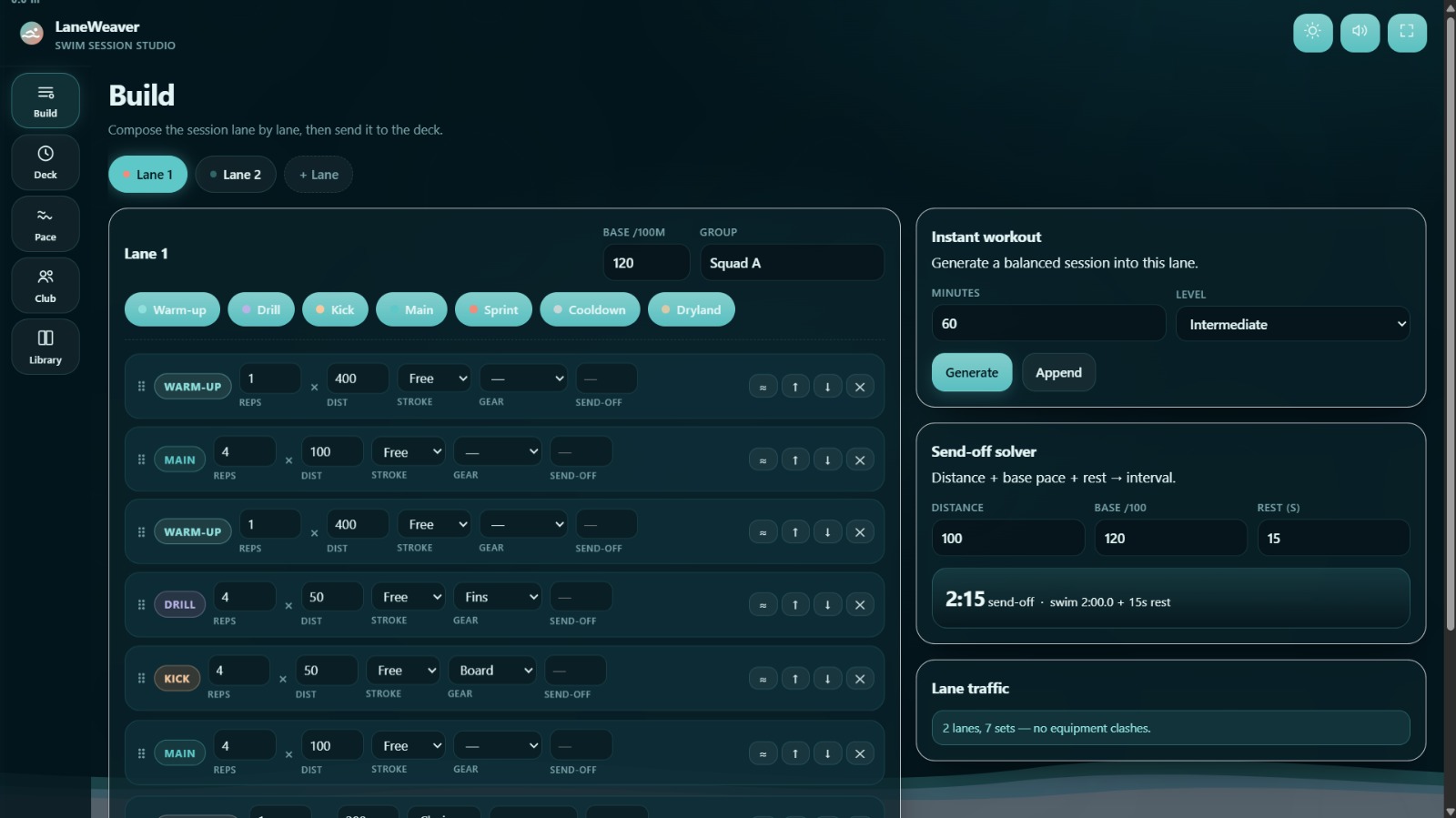
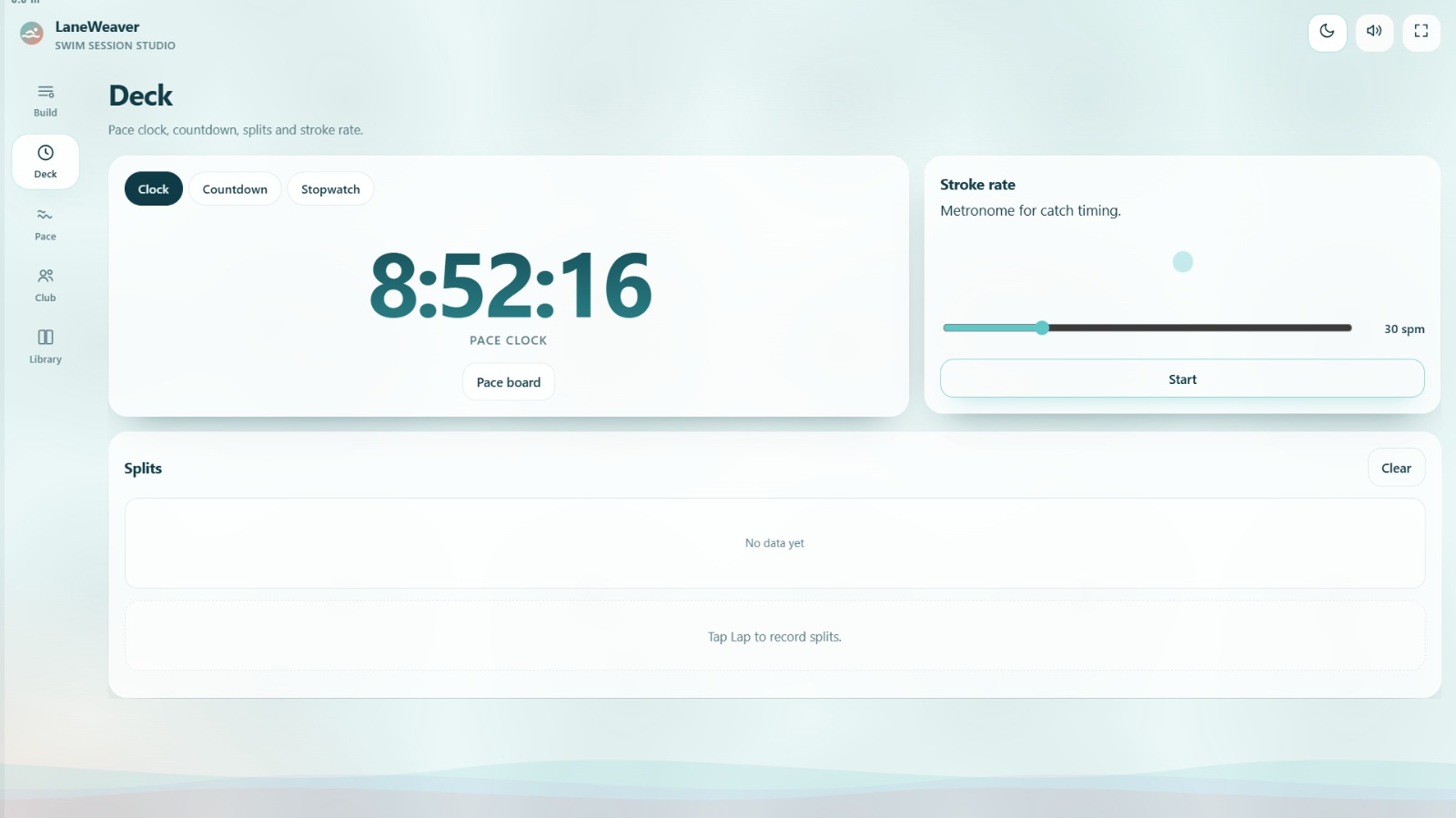
• A visual drag-and-drop composer to build multi-lane sessions instantly. • A smart send-off solver that calculates exact intervals based on your lane's actual pace. • An equipment conflict detector to ensure two lanes never fight over the same gear at the same time. • A live pool-deck mode with a giant pace clock, countdown timer, and stroke-rate metronome.
The output isn't just another static clipboard. It's the gap between what you wrote on paper and what will actually happen on the pool deck, along with visual split waveforms to instantly see pacing shape.
You also get a massive fullscreen pace board for glare-free coaching, and a deep ocean dark theme for evening sessions, helping you run the practice on reliable, real-time data.
I didn't build this because swim workout planning is an interesting scheduling problem. I built it because a coach wrote a 97% perfect plan on paper that meant nothing in the water, and everyone around him thought it was impressive.
If you're about to run a session or send a workout to your team, compose it in LaneWeaver first. If the workout holds up on deck, you earned it. If it doesn't, that's one of the most valuable lessons you can learn.
Tech stack
- Cursor
- Vercel
Links
Prompt
Look: Design the visual style around a soft watercolor palette using seafoam, aqua, sand, coral, and lavender. Include a deep ocean dark theme that feels like an abyss with glowing cyan borders and neon gradients. The background needs a living waterline made of three drifting sine waves and faint drifting light dapples. Cards should gently bob up and down. Include a depth meter on the left edge that fills as the user scrolls. When the user taps or clicks, show a concentric ripple effect from the exact touch point and briefly splash the waterline upward.

Layout: Use a responsive grid shell. On desktop, use a side rail for navigation. On phones, shift the rail to a bottom tab bar with wave-shaped edges. Ensure there is no horizontal overflow and all touch targets are at least 44 pixels. Transitions between main sections should use a wave-wipe shape instead of a simple fade.

Input: Make workout set cards draggable so users can reorder them. Use input fields and dropdowns for reps, distance, stroke type, equipment, and send-off intervals. Provide a button on each set card to automatically solve the send-off time based on the lane's base pace.

Sound: Generate sounds using the Web Audio API. Play a soft bubble click when tapping options and a water swoosh when swiping or changing views. Include a speaker icon in the header to mute or unmute the sounds.

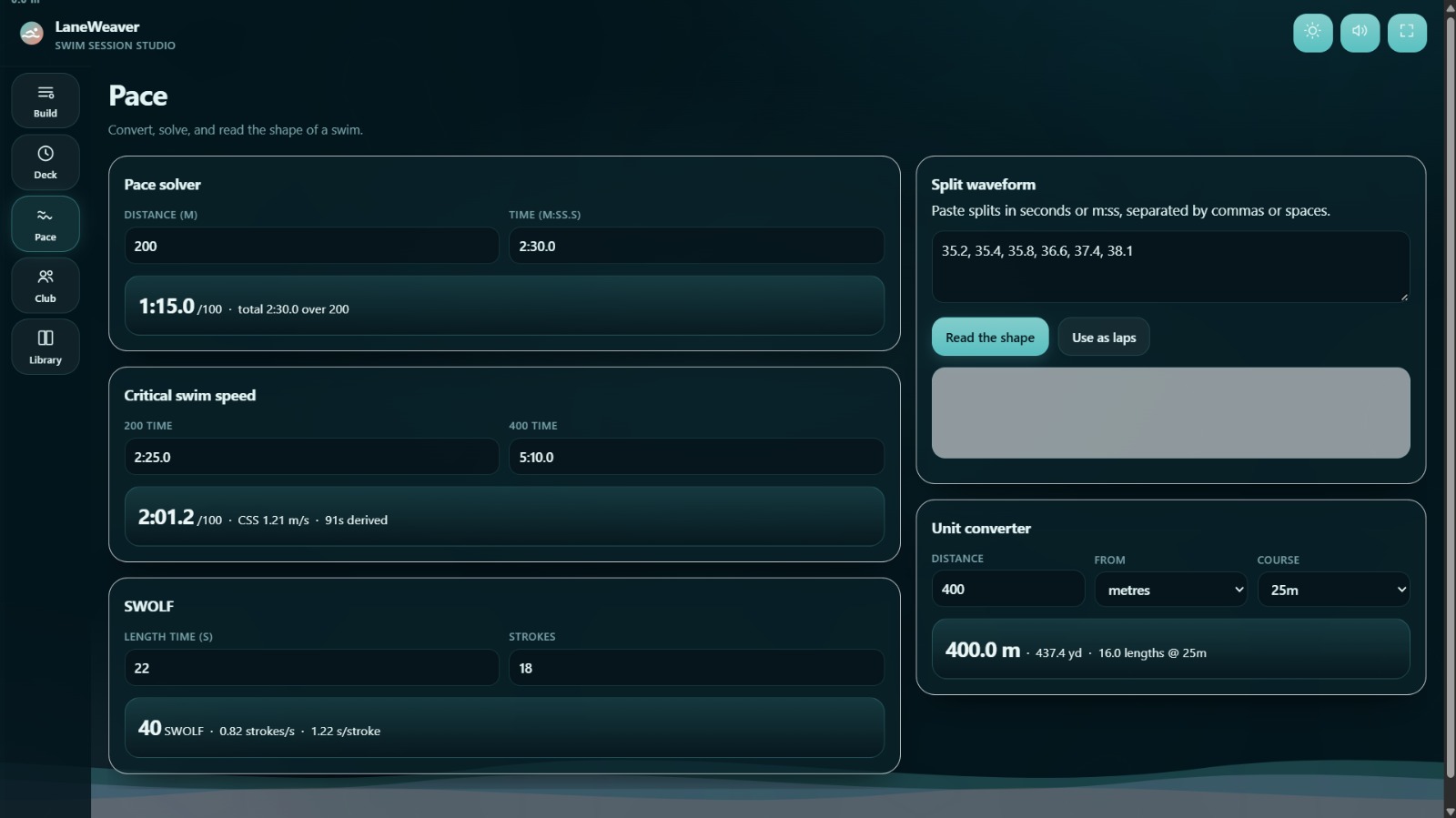
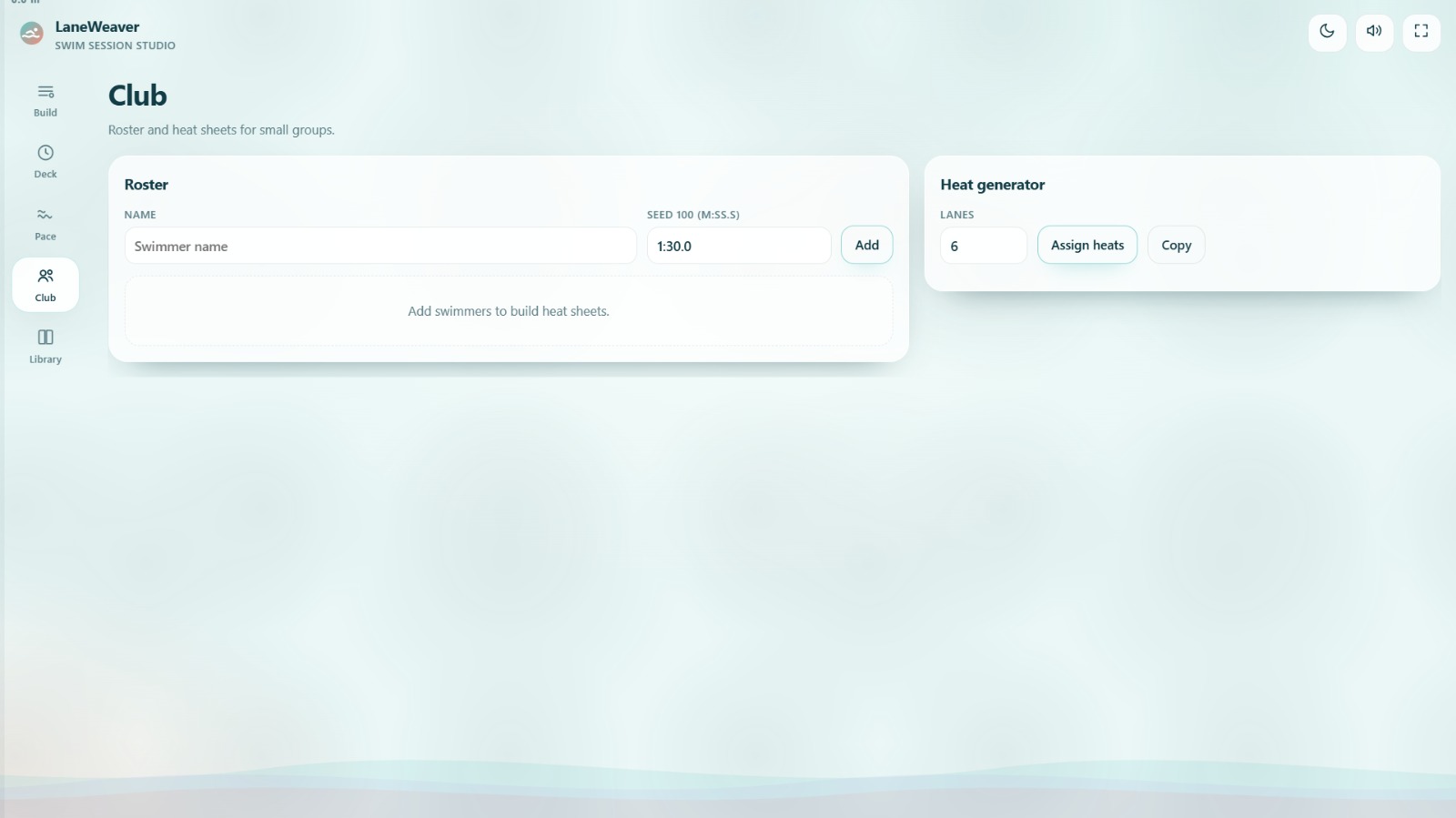
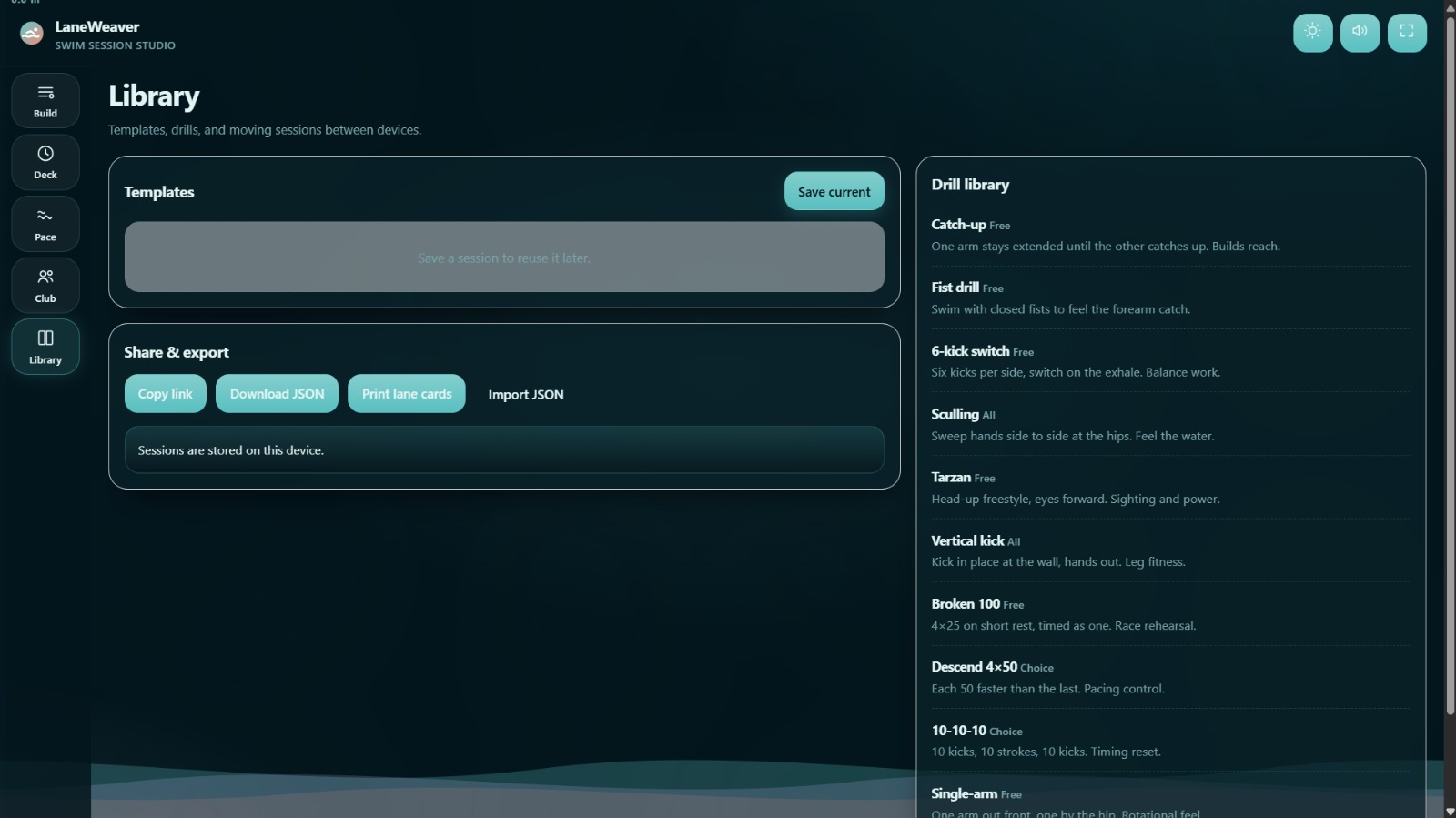
Features: The app needs five main sections. Build lets users compose sessions across multiple lanes, add sets from a library, view totals, see a stroke mix bar, and use an instant workout generator and a send-off solver. Build should also include a traffic detector that warns if two lanes use the same gear at the same time. Deck provides a pace clock, a countdown timer with an audio beep at zero, a stopwatch with lap recording, and a stroke rate metronome. Pace includes a pace solver, critical swim speed calculator, SWOLF calculator, unit converter, and a split waveform analyzer that parses pasted times into a visual graph with pacing notes and a button to send those splits to the Deck. Club manages a swimmer roster and generates heat sheets by sorting seed times into lanes. Library saves session templates, exports and imports data, copies shareable links, prints cards, and displays a drill library.

Settings: Include a button to toggle fullscreen and a button to switch between the light watercolor theme and the deep ocean dark theme. Save all user data and theme preferences in local storage so they survive a page refresh. Respect the operating system's reduced motion setting to pause animations for accessibility.

Build this as an installable progressive web app with a custom swimmer favicon. Keep the code modular and test in a browser with no console errors and audio starting only after the first user gesture.6 likes · 2 comments
Comments (2)
I swim some laps sometimes, will use this next time I do. I’ve actually been wanting to swim more. This is pretty cool thanks for sharing
this is really great build<div><br></div>